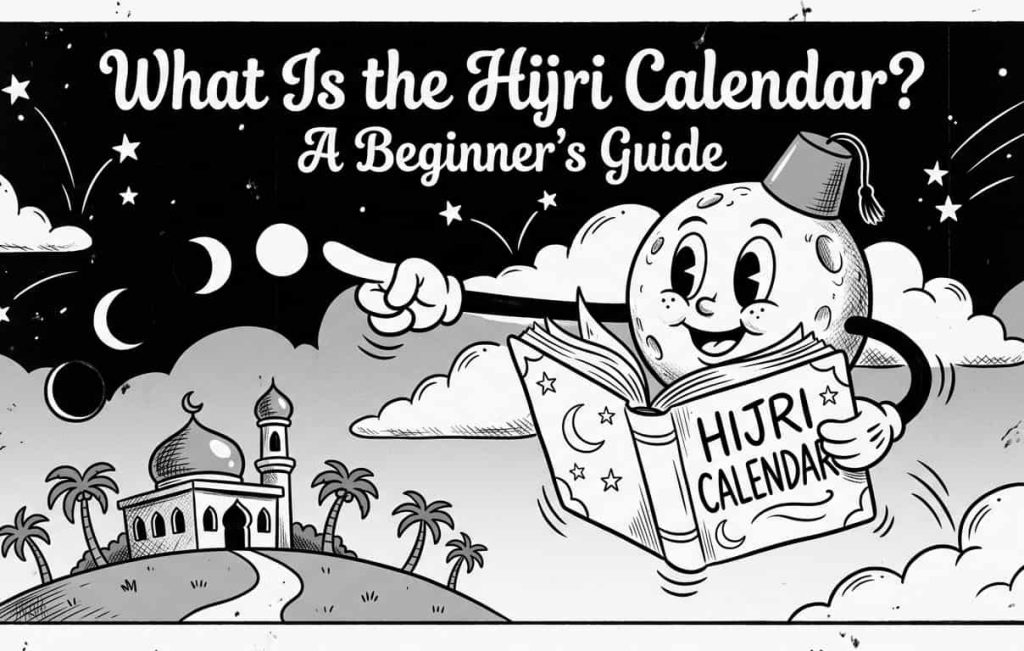
The Hijri calendar, also known as the Islamic calendar, is the calendar used by Muslims to determine important religious dates and events throughout the year.
It is used to identify Islamic months, fasting days, Ramadan, Eid celebrations, Hajj, and many other significant occasions.
Unlike the Gregorian calendar used in most countries today, the Hijri calendar follows the lunar cycle.
If you regularly follow Islamic dates, keeping the current Hijri date visible can make it easier to stay aware of upcoming events and fasting days. Many Muslims today use digital tools such as Hijri calendars, mobile apps, and home screen widgets to track the Islamic calendar more conveniently.
What Does “Hijri” Mean?
The word “Hijri” comes from the Hijrah, the migration of Prophet Muhammad ﷺ from Makkah to Madinah.
This historic event marks the beginning of the Islamic calendar.
For this reason, Islamic years are often written with the abbreviation:
AH (Anno Hegirae)
which means “Year of the Hijrah.”
How Does the Hijri Calendar Work?
The Hijri calendar is based on the moon.
Each month begins with the appearance of a new crescent moon.
Because lunar months are shorter than solar months, the Islamic year contains approximately 354 days.
As a result, Islamic dates move through the Gregorian calendar over time.
This is why Ramadan and other Islamic events occur in different seasons throughout a person’s life.
You may also be interested in learning why Ramadan moves every year and why Islamic dates change on the Gregorian calendar.
The 12 Months of the Hijri Calendar
The Islamic calendar contains twelve months:
- Muharram
- Safar
- Rabi al-Awwal
- Rabi al-Thani
- Jumada al-Awwal
- Jumada al-Thani
- Rajab
- Sha’ban
- Ramadan
- Shawwal
- Dhul Qa’dah
- Dhul Hijjah
Each month has its own significance and historical importance within Islamic tradition.
Why Is the Hijri Calendar Important?
The Islamic calendar helps Muslims determine:
- The beginning of Ramadan
- Eid al-Fitr
- Eid al-Adha
- Hajj season
- Day of Arafah
- Day of Ashura
- Ayyamul Bidh fasting days
- Islamic New Year
Without the Hijri calendar, it would be difficult to track these important occasions accurately.
Why Does the Hijri Date Sometimes Differ?
You may notice that the Hijri date occasionally differs between countries.
This usually happens because:
- Moon sightings vary by location
- Different authorities follow different methods
- Some communities rely on calculations while others use direct moon observations
A difference of one day is not uncommon in many parts of the world.
This is also why some Muslims prefer Hijri calendars that allow date adjustment to match local moon-sighting announcements.
How Do Muslims Track the Hijri Date Today?
Historically, people relied on direct moon observation and printed calendars.
Today, many Muslims use:
- Islamic calendars
- Hijri date websites
- Mobile applications
- Home screen widgets
Digital tools make it easier to stay aware of important Islamic dates throughout the year.
Why Keeping Track Matters
Many important acts of worship are connected to the Islamic calendar.
By knowing today’s Hijri date, Muslims can prepare for:
- Ramadan
- Sunnah fasting days
- Hajj season
- Islamic holidays
- Significant events in Islamic history
Regular awareness of the Hijri calendar helps Muslims stay connected to the rhythm of the Islamic year.
Track Today’s Hijri Date More Easily
Checking the Islamic calendar occasionally can make it easy to miss important dates.
Many Muslims prefer to keep the current Hijri date visible every day using a home screen widget.
Hijri Today helps users stay connected to the Islamic calendar with:
- Daily Hijri date widgets
- Islamic event reminders
- Sunnah fasting reminders
- Adjustable Hijri date offset
- Multiple language support
- No ads
- No tracking
Whether you’re preparing for Ramadan, tracking Ayyamul Bidh, following Ashura, or simply checking today’s Islamic date, having the Hijri calendar visible can make a meaningful difference.
Final Thoughts
The Hijri calendar is more than a way of counting days.
It is a system that connects Muslims around the world to important acts of worship, historical events, and spiritual opportunities throughout the year.
Understanding how the Islamic calendar works is the first step toward making better use of it in daily life.
By staying aware of today’s Hijri date, you can better prepare for the many important moments that occur throughout the Islamic year.